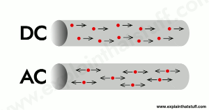
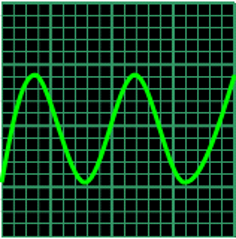
Alternating current (AC) is simply a flow of current which rises from zero, then falls back to zero, then reverses direction and rises and falls again, as shown in the graph in figure 1. In a wire, the particles (electrons) that carry the electrical energy move back and forth.
Figure 1 Alternating current shown on a graph
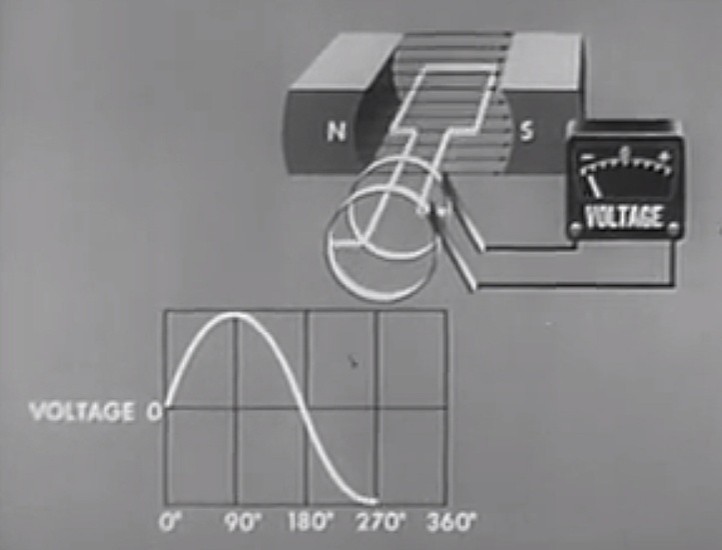
As they oscillate through the metal of a light bulb or heating coil for example they light it up or heat it up, regardless of which direction the particles are moving.Alternating current is used to deliver our energy partly because that is how it emerges from a generator. In figure 2 you can see that electricity is generated by a loop of wire spinning around between the north and south poles of a magnet.
As one side of the loop of wire passes by the north pole the current flows one way; as the loop turns halfway around, the other side passes by the north pole so then the current now flows the other way.The rise and fall and reversal of current is shown in the graph
Figure 2 model of a generator with a loop of wire rotating between the poles of a magnet
.
Another advantage of AC is that it is simple to raise its voltage to hundreds of thousands of volts to transmit it over cables. This minimises the loss of energy as the cables heat up. It is also simple to lower the voltage again near to where it is needed.
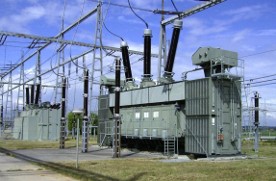
The device that changes the voltage is called a transformer. You may have seen one of these in a substation in your neighbourhood (figure 30).
Figure 3 transformers connected by ceramic insulators to overhead cables
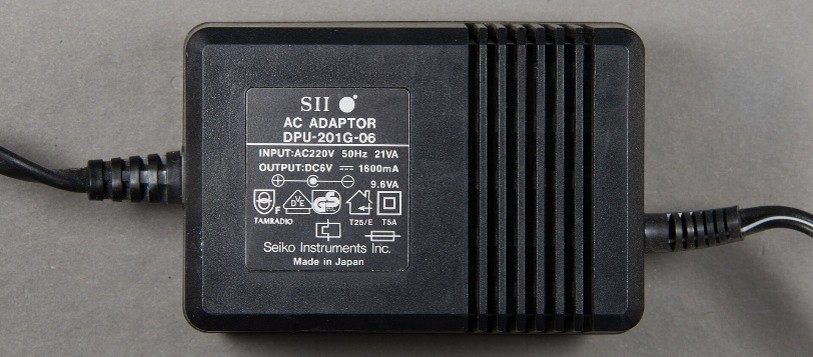
There’s also a much smaller transformer in the so-called ‘charger’ or ‘adaptor’ you use to connect your 4 or 5 volt mobile phone or laptop to the 230 volt mains.
Figure 4 charger or adaptor
Direct current (DC)
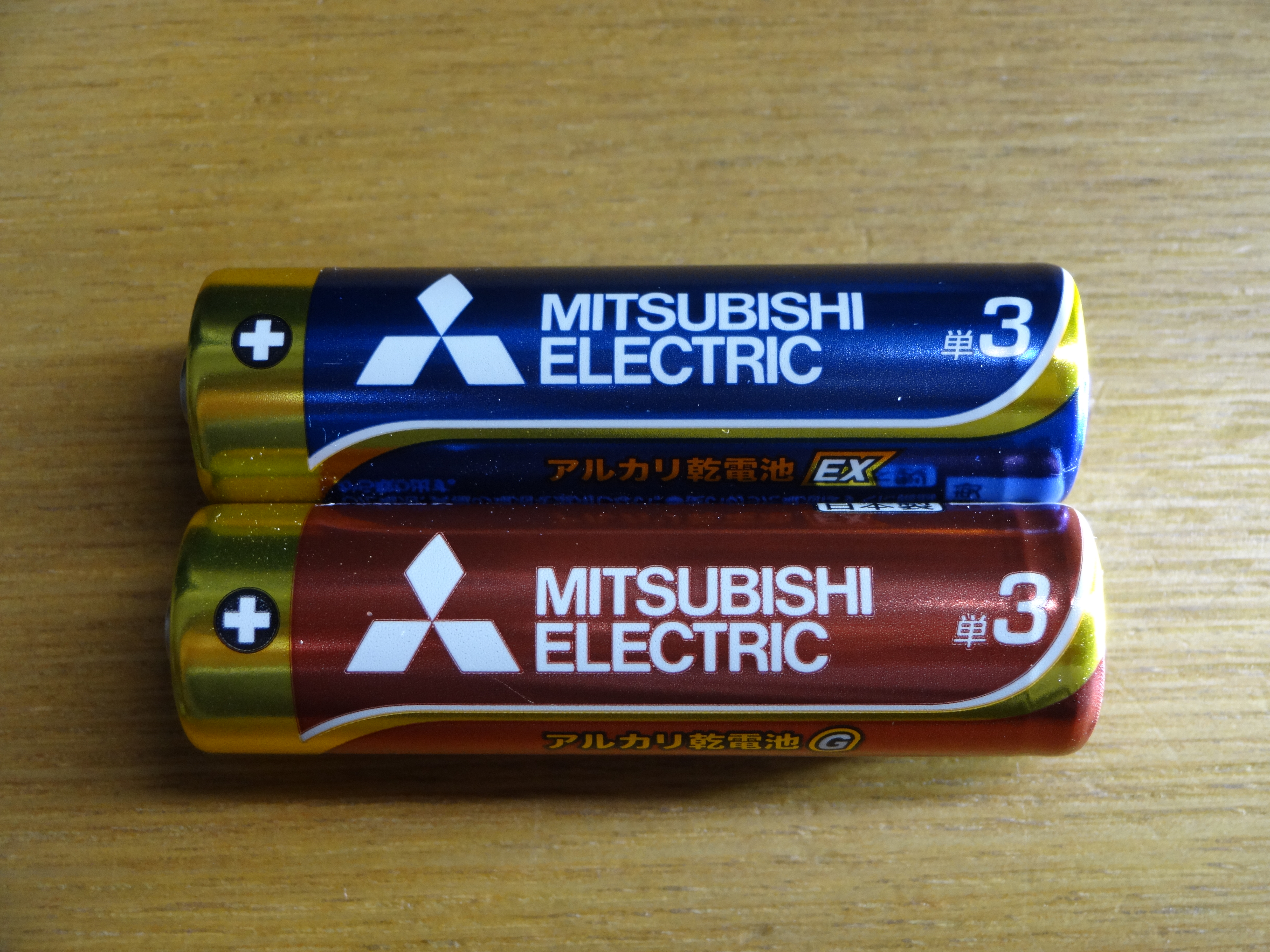
Current from a battery, however, does not alternate; it always flows one way, nominally from the positive end, through your device and back to the negative end. In fact, the particles that flow are negatively charged and flow the other way. This was not known when conventions were established in the nineteenth century.
Figure 5 Batteries showing the + terminal.
Figure 6 electrons flowing one way in direct