

“What do we mean by cold-blooded and warm-blooded?” asked Marian in a science discussion. We’d been discussing the demise of the dinosaurs which we knew had occurred suddenly, thanks to a climate collapse following the impact of a massive meteorite in the Yucatan peninsula.
At first sight the answer seemed obvious but, on reflection, she asked “does cold really mean cold? What about a lizard lying in the sunshine?”
Warm and cold blooded
It turns out that ‘cold blooded’ doesn’t really mean that an animal’s blood is cold, but that its internal temperature varies according to its surroundings. For species that live where temperatures are practically constant, such as the deep ocean, there is no problem about regulating temperature. But where temperature varies widely, species may need to seek out external heat to keep warm, or conversely, seek shelter from it to cool down. Reptiles, for example, will either bask in the sun or run to the shade depending on the prevailing temperature. Insects adopt a variety of different behaviours to stabilise their temperature. Bees, for example, huddle together to retain heat; butterflies turn their wings towards the Sun before taking off and many flying insects vibrate their flight muscles to warm up.
We mammals, by contrast, go to great lengths to maintain our bodies at a fixed temperature. As we know from experience, having a fever upsets the normal functioning of our bodies. Excess temperatures impair our metabolism. In hot weather, dogs will attempt to lose heat by sticking out their tongues and panting. The increased evaporation of saliva helps cool them. The evaporation process requires heat energy, which it draws from the body leaving it cooler. Humans achieve a similar result by sweating.
The question that followed from Jean was inevitable: “why do we go to such trouble to maintain a steady temperature – surely it uses a lot of energy?” It’s true, it is costly in energy to maintain a temperature above that of the outside world, but it is necessary to get the best out of the chemical reactions that make our bodies tick. Chemical reactions tend to go faster at higher temperatures. We know this from simply washing clothes: detergents dissolve grease more effectively in warm water. The breaking and making of bonds between atoms happens more easily and quickly at higher temperatures.
In biological systems, however, there is an important difference. Unlike the chemistry of the kitchen or bathroom, chemical reactions in living things are highly controlled. Washing clothes in washing powder involves a direct and uncontrolled encounter between molecules of detergent and grease in the reaction that cleans your clothes. In living systems however, the main chemical reactions are not direct, they are mediated in a controlled manner by active agents called enzymes. These are themselves molecules – giant ones – that act like tools, cutting up big molecules, sticking together small ones or modifying molecules by removing atoms or adding extra ones. To carry out their tasks, enzymes need to be kept below a critical temperature; and to work their best they need to be held within a narrow ‘optimal’ range of temperatures. That’s why body temperature needs to be regulated.
Enzymes are all proteins: complicated structures built from a long chain of smaller molecules connected together like beads on a necklace. The chain gets folded up to create a three-dimensional shape capable of doing its chopping or welding task. The model of an enzyme in figure 1 shows a long chain, made of hundreds of linked sub-units, weaving its way through random curvy sections (brown) and more regulr spirals (blue), utlimately forming a tangled globule, typically comprising thousands of atoms.
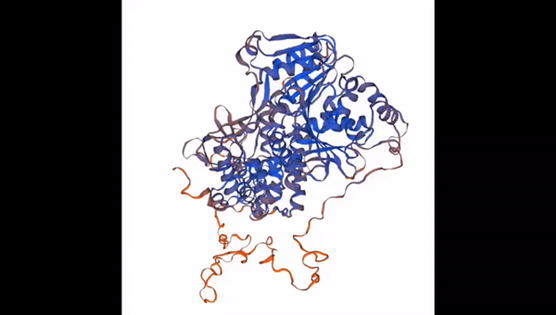
Figure 1 Model of a protein as a folded chain
The atoms of the chain are bonded together strongly making it a robust structure. Folding up into a globule, however, relies on much weaker adhesion between various regions of the chain. If the temperature gets too high, this adhesion fails and the chain unravels (figure 2); the enzyme is no longer able to function.
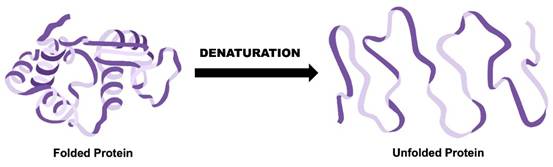
Figure 2 the unfolding of a protein
‘Cold-blooded’ animals
The range of species that don’t regulate their body temperature internally is huge. It’s not just the reptiles, but also all the insects, snails and many other so-called invertebrates. As you might expect, the next question posed in the discussion group was: “What are invertebrates?” As the name suggest, they are a category of animals that simply lack a vertebral column. Over 95% of all known animal species are invertebrates.
In place of what we might call a skeleton – a rigid structure inside our bodies – invertebrates have alternative support structures equivalent to skeletons outside their bodies.
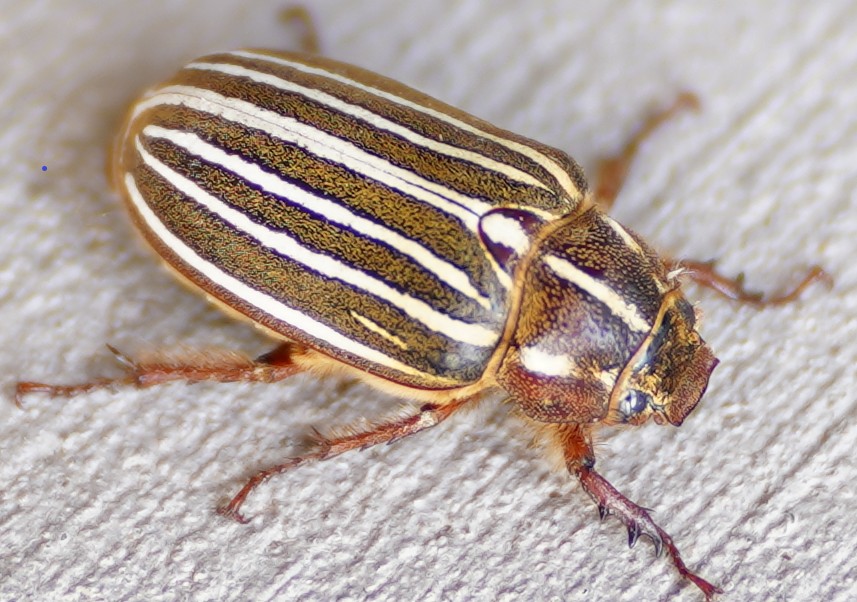
Insects, for example, rely on an external covering called an exoskeleton, composed of a molecule called chitin which, combined with various proteins, provides a tough structure. Figure 3 shows the exoskeleton of a beetle on the legs as well as the body.
Figure 3 Exoskeleton of a beetle
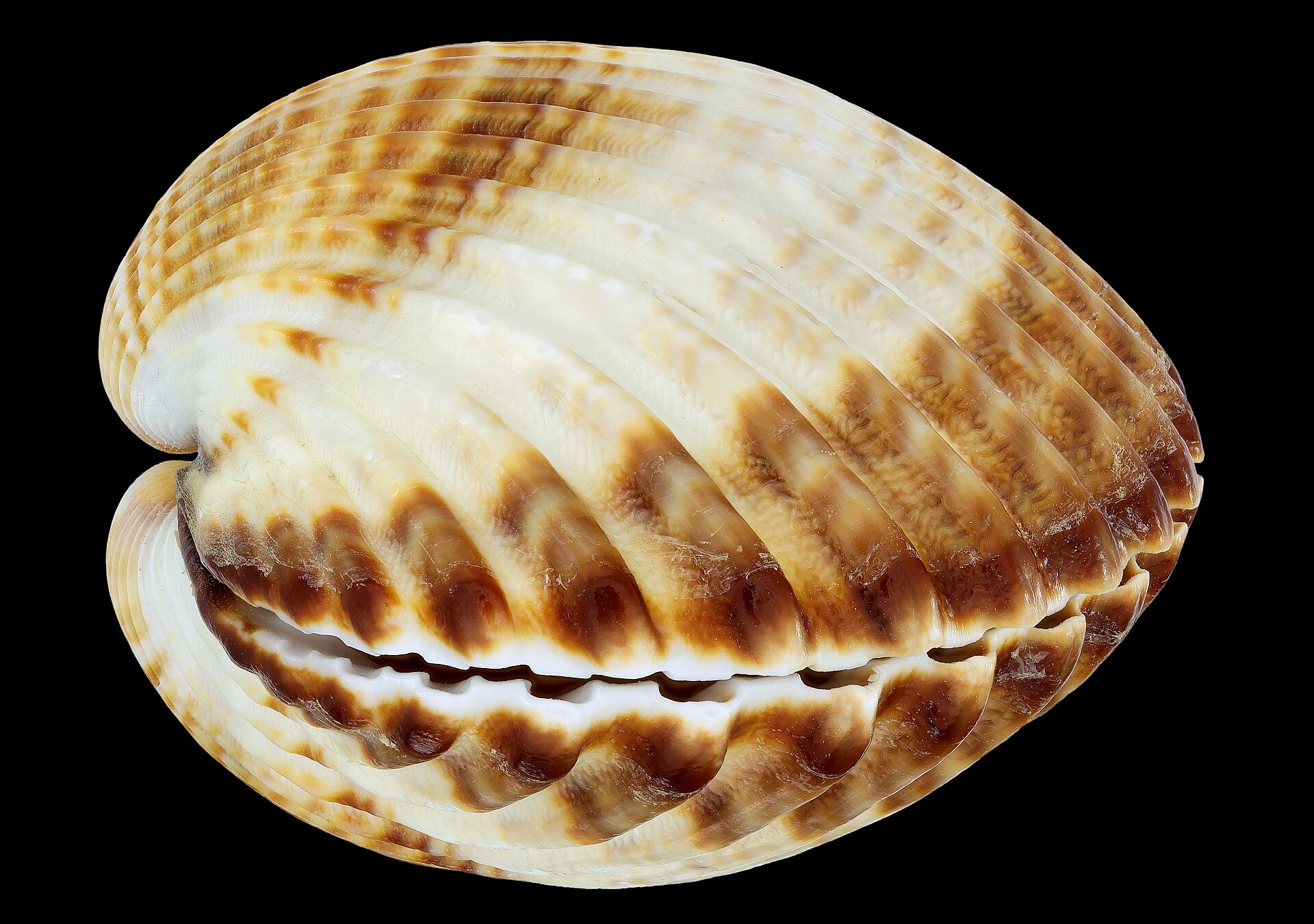
Molluscs, such as snails and clams, make use of a different type of exoskeleton: shell structures made of calcium-rich compounds (figure 4).
Figure 4 Exoskeleton of a clam
At this point in the discussion, Marian asked a fundamental question about invertebrates: “Do these boneless ‘cold-blooded’ animals even have blood?” The answer seems to be yes and no. They mostly have a fluid that circulates and does much of what blood does: distributing nutrients, getting rid of waste and so on. It’s called haemolymph. For insects and many other arthropods, this fluid is pushed around the organs of the body by a heart, but without circulating through arteries and veins. Larger crustaceans, such as lobsters, do have blood vessels. One thing the blood does not do in most insects and other arthropods is carry oxygen: they get this directly through openings in their external surfaces. With no oxygen function, the haemolymph doesn’t need haemoglobin or the red-blood cells that carry it, so isn’t red. The fluid is clear in many species but looks blue-green in some others which use an alternative protein to haemoglobin, one which contains copper rather than iron.
Insect muscles
Enlarging on the insect theme, Julie went on from thinking about their blood to wondering whether they have muscles. “They must have surely”, Jean responded, “to get about and fly!” They do indeed have muscles for getting about, and for other purposes. They have muscles to enable segments of the body to move relative to one another, others to activate the digestive system through peristalsis, and, most importantly, special muscles to make flight possible.
In the absence of bones to attach to, insect muscles are attached via fibres to the rigid outer structure of the insect. The flight muscles are highly specialised as they have to be able to contract and relax very rapidly to power the beating wings, up to 1000 beat per second in some cases. The muscles attach to the lower part of the thorax and pull down and push up on a hinged system that flaps the wings.
Figure 5 Insect flight muscles (a = wing; b = hinges; c and d = muscles)
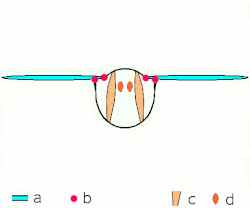
“What are the wings made of” wondered Marian; “they are so delicate”. Surprisingly, these also involve chitin, the same substance as in the rigid exoskeletons of beetles. Chitin is a tough but flexible substance which combines with different proteins to make rigid materials like the back of a beetle or more flexible ones like the wings of a butterfly. A rubber-like protein called resilin gives extra elasticity at the wing joints.

Veins run throughout the membrane of a wing which helps with the stresses of flight. They also carry the haemolymph fluid through the wings. The wings of different insects vary, some are likeparchment, others are more sclerotic depending on the amount of minerals incorporated in their structure.
Figure 6 Veins in the wings of a Spot Puffin butterfly
Marian was interested in the way the wings are attached by threads to the outer exoskeleton of the animals. It led her to ponder: “what are muscles attached to in us human beings?” Discussion lurched suddenly from the delicacy of tiny insect wings to the grosser structure of beefy human beings.
Skeletons
Patrick had often wondered about how the human skeleton holds itself together. “How is it that an assembly of separate bones, loosely connected, is able act as firmly as a rigid metal framework?” he queried; “yet at other times to be fluid and flexible”. The clue must surely be in the vital connections between the bones and the way in which muscles link to them. We know that these connecting tissues – ligaments and tendons – can easily be damaged in sports activity and in accidents. “What are they” asked Julie “and what’s the difference between the two”.
Both are examples of ‘connective tissue’. Tendons link muscles to bones and transmit force to them; ligaments, on the other hand, connect bone to bone. The Achilles tendon, as an example, pulls on the heel bone to enable the foot to move up and down. They are made of fibres of a structural protein called collagen arranged in parallel bundles. They are flexible but also relatively inelastic, so they don’t stretch when muscles pull on them.
Ligaments are also made of collagen molecules but contain elastin as well, giving them some elasticity to allow for movement. Their role is to provide stability across the joints where bones meet. It’s these that hold the skeleton together and control the range of movement at joints. The anterior cruciate ligament in the knee, for example, connects the thigh bone to the shin bone, making sure the latter doesn’t move too far forward. Figure 7 shows both tendons and ligaments connecting and controlling movement of the knee.
Figure 7 Knee, showing tendons and ligaments
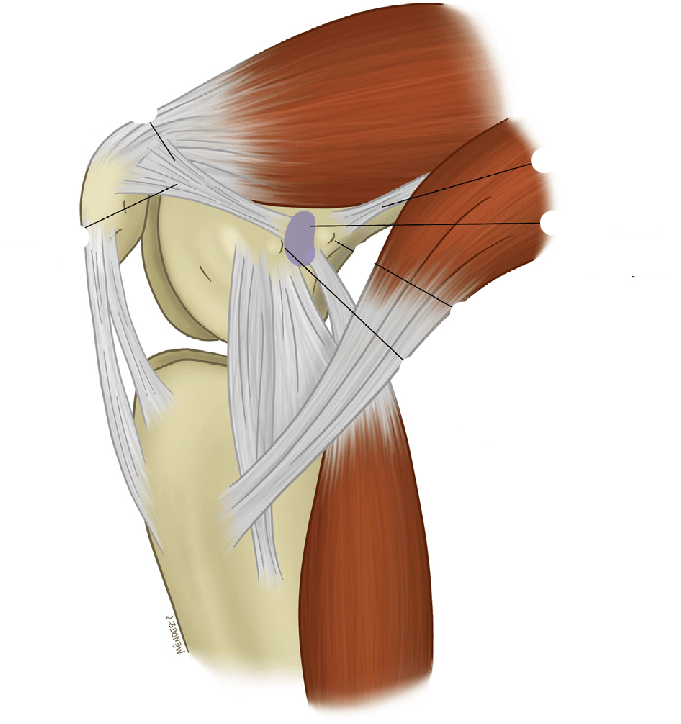
The way the bundle of bones and muscles in our bodies, linked together via tendons and ligaments, manages to hold us together, is an outstanding example of coordination. Keeping us upright, walking, crouching or adopting an endless variety of positions involves intimate communications between three distinct systems in the body. The first – the vestibular system – tells us where our head is in space.
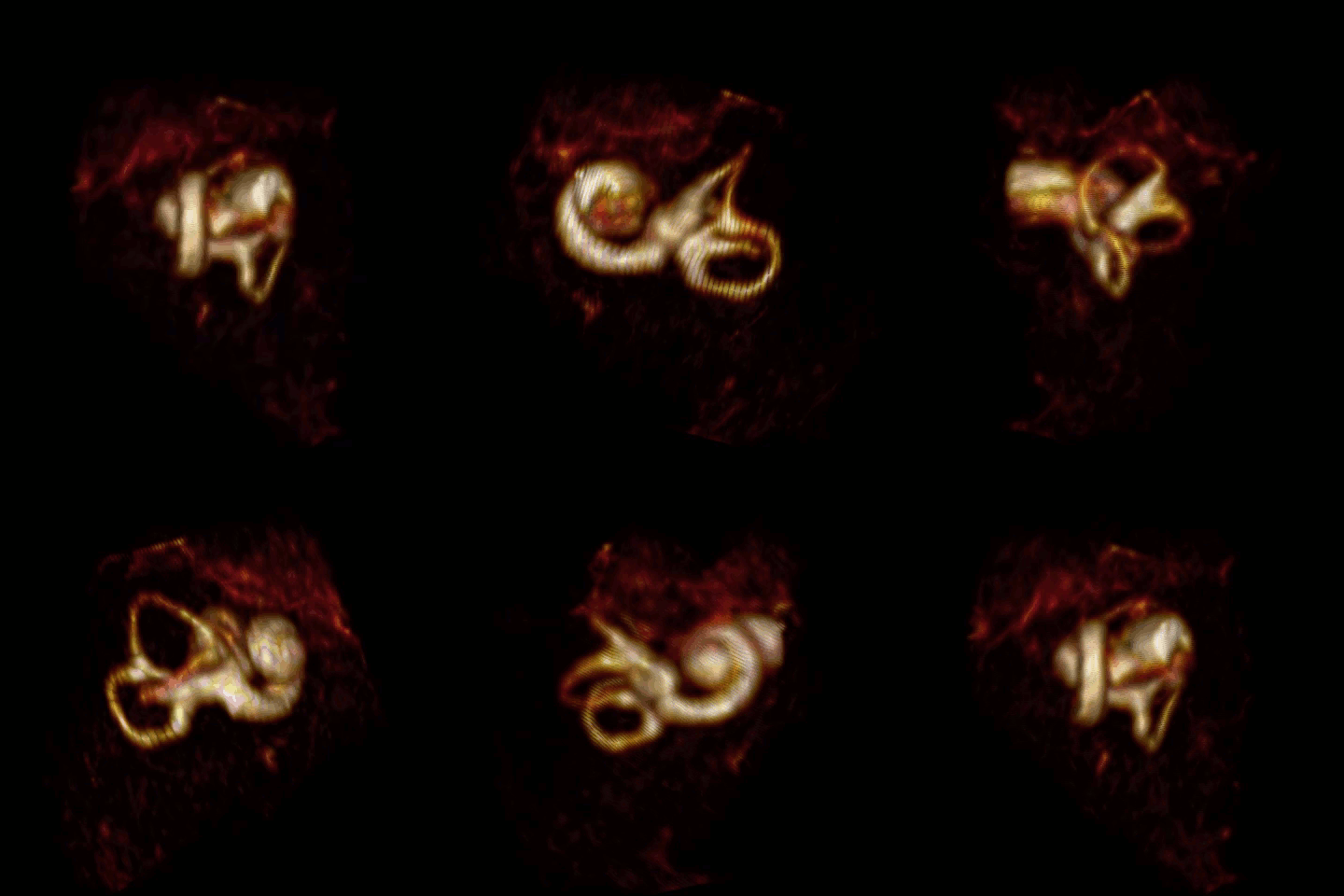
It’s a collection of tiny bony structures in the inner ear, shaped like semicircles and arranged at right angles to one another. These are filled with fluid which responds to movement, in all three dimensions. Tiny hairs inside the structures are bent by movement of the fluid which causes messages to be relayed to the brain about the position and orientation of the head.
Figure 8 The vestibular system in the inner ear
The second system – proprioception – provides information about the position of your various limbs, which it achieves through receptors located in the various muscles and joints. The third system – motor control – uses the information provided by the other two to direct the action of all the muscles required to adopt a particular position or action, such as walking. The entire suite acts with such a degree of coordination that we are largely unaware of any of the activity that is keeping us upright or walking in a straight line.
Conclusion
This blog has followed the somewhat haphazard path of an actual science discussion. It has pursued questions about temperature regulation, invertebrates and mammals, blood, muscles, tendons and ligaments – all in an effort to understand the way different categories of animals (known as ‘phyla’) cope with different environments. Despite the major differences in structure and behaviour that have evolved in these different phyla, they have much in common: all have to safeguard the enzyme reactions of their metabolism; all have to be able to coordinate activity and move around, and all need a structure to hold themselves together. The theme of this blog has been the immense variety of ways in which these common needs are met. Evolutionary pressure, favouring those that best fit the surrounding conditions, leads to such extraordinary diversity of forms. Amazing!
© Andrew Morris June 2026
 Getting to Grips with Science