
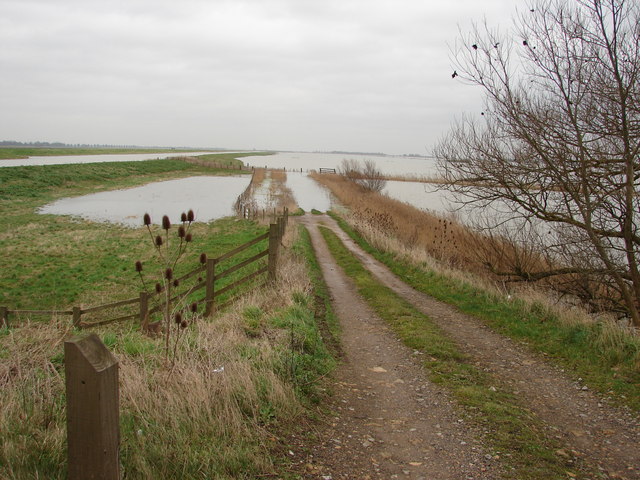
This winter has seen widespread flooding in town and country bringing disruption to countless families and businesses. According to the UN Environment Programme, floods are made more likely by the more extreme weather patterns caused by long-term global climate change.
The cause is increased rainfall, either in intensity, duration or frequency. Based on modelling of the physical science behind precipitation, the Intergovernmental Panel on Climate Change foresees an increasing trend for flooding in Europe.The fundamental cause of increased rainfall is rising global temperatures. The basic physics of this is about how the air around us gets hold of water and holds on to it (or not).
Evaporation
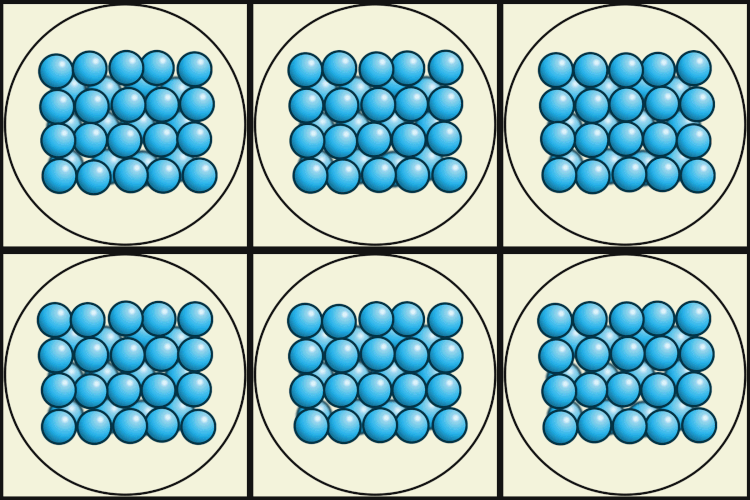
The first piece of physics is evaporation. Like most substances, water is able to exist in three different states – solid, liquid and gas or vapour. In solids the molecules are packed close together in a fixed array, often a crystal – ice in the case of H2O molecules. The temperature has to be relatively low for this stable pattern to remain.

If the temperature rises however, these molecules begin to jiggle around, initially in their fixed positions. In effect they are absorbing energy from the warmer surroundings and taking it up internally as energy of movement as they jiggle around.
Figure 1 H2O atoms vibrating in ice
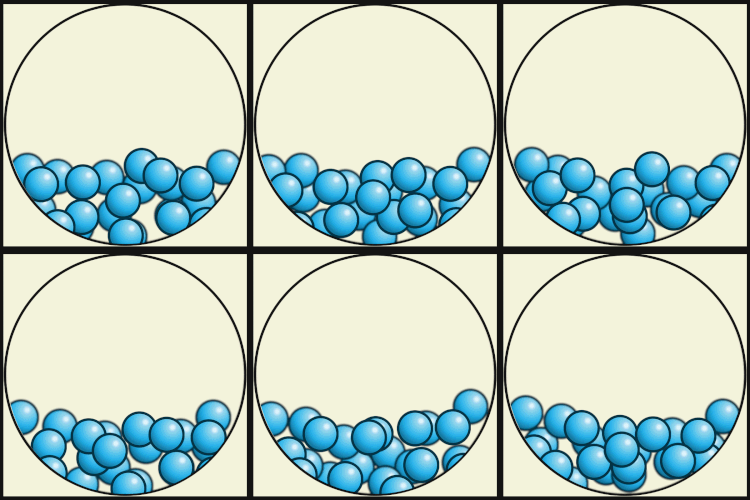
At a certain temperature, they cease to be fixed and roam around in a fluid way but still close to one another- they melt and form a liquid.
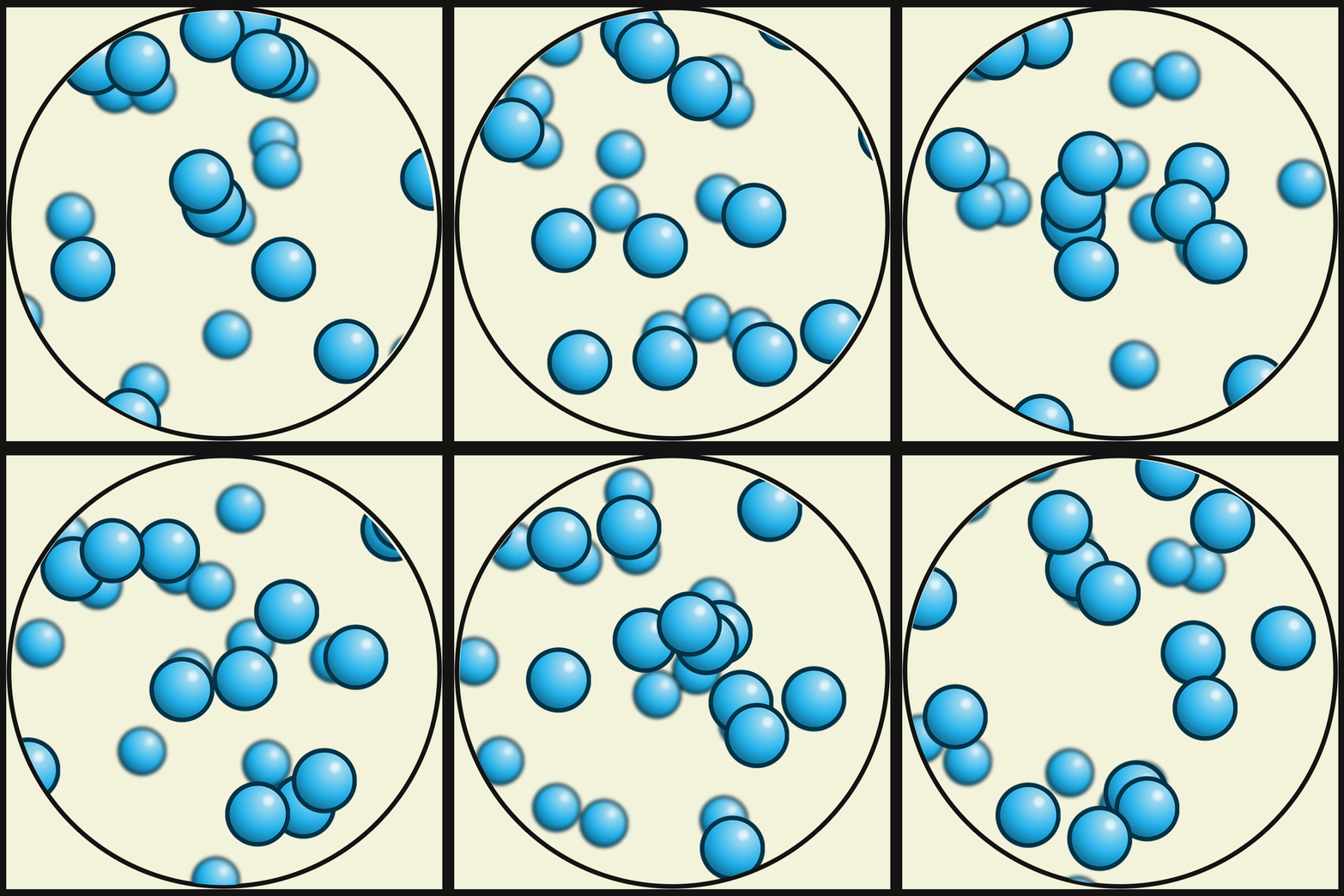
As the temperature of the liquid rises further, the molecules in it move around ever faster absorbing the energy from the surroundings and holding on to it as energy of movement. As the temperature rises, some of the fastest moving molecules are moving fast enough to simply break away altogether. They leave the other molecules in the liquid and roam around freely in the surrounding air – that is they form a gas or vapour. This process is what we call evaporation. The state of the molecules in these three states is neatly captured in these animations:
Figure 2 movement of molecules in the three states of matter
Solid liquid gas or vapour
The ability of water to exist in any of these three conditions under normal conditions on our planet is an essential aspect of why there is life. Melting and freezing, evaporation and condensation have helped regulate conditions on Earth. These processes enable humans to sweat, pondlife to survive the winter and raindrops to form from ice crystals in the clouds.
It is clear from this simple physics that warmer seas will mean faster moving water molecules. This will inevitably lead to more molecules leaving the surface of the seas and entering the atmosphere – evaporating.
Water vapour
Once water molecules enter the atmosphere they mix in with the molecules that are already buzzing around there – mainly nitrogen and oxygen ones (and a small but increasing number of carbon dioxide ones, unfortunately).
Figure 3. Mixture of nitrogen, oxygen water and carbon dioxide molecules in air.
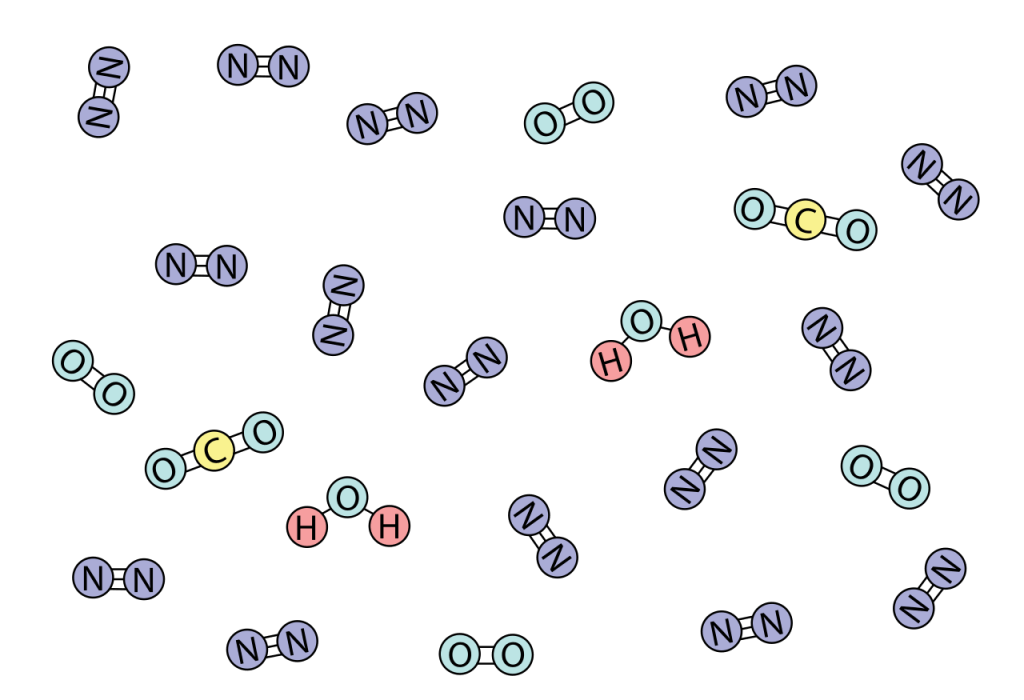
We sense the presence of water molecules in the air as humidity. On a humid day there are a lot of them in the mix, on a dry day fewer.
However, the number of water molecules that can be sustained in the mix is limited. If too many are present in the atmosphere, they group together and reform back into liquid droplets. This process is the opposite of evaporation; it’s called condensation and can happen in the air just as much as on your windowpanes. The air acts like a sponge. It soaks up water to a certain extent, until it gets saturated. Once a sponge gets saturated it can’t absorb any more water. Any further water added to it simply runs off. It’s the same in the air – once that air is filled with water molecules, it is saturated and can take no more. In weather reports this is what is meant by 100% humidity. When the air is only half-filled with water molecules the humidity is 50%.
Saturation
There is one further, but very important complication, which underlies the effect of climate change on flooding. Saturating air with water molecules is not exactly comparable to saturating a sponge. The atmosphere’s ability to absorb water isn’t just a fixed thing, as it is for a sponge. A sponge will always take up the same amount of water before it gets saturated. Air however will take up more water before getting saturated when it’s warm, and less when it is cold. Its absorption ability depends on the temperature. This is something you may have noticed when you get into a cold car on a cold morning. As you breathe out warm water vapour with your breath, the windscreen quickly fogs up. This happens when water molecules in the vapour of your warm breath go on to hit the cold air around the screen. In the colder environment the vapour can no longer hold on to the water molecules. It quickly becomes saturated and the molecules are expelled as liquid droplets and form a mist of tiny droplets. To get rid of this you have to raise the temperature of the screen and the surrounding air so it is no longer saturated and can hold on to a greater number of water molecules. You turn on the screen heater to make this happen.
Global warming
The Earth is effectively wrapped around with a blanket. Molecules in the atmosphere absorb a large fraction of the heat radiated outwards from the surface of the Earth. It doesn’t escape out into space but remains trapped in the atmosphere. The effect is like the heating of a greenhouse when the sun shines – the glass panes absorb any heat radiating out from the inside, trapping it in the greenhouse and warming it up. Molecules of carbon dioxide and methane are particularly good at absorbing heat energy. The work of humans over the centuries has rapidly increased the amount of these two gases in the atmosphere. More than 90 percent of all the excess heat energy trapped by the atmosphere in this way ends up being re-absorbed here on Earth in the oceans.
The rise in temperature that follows seems small because this heat energy is distributed over the vastness of all the oceans. It’s currently a little less than one degree Celsius, but it’s rapidly speeding up – about 24% faster than a few decades ago. The effect of even small rises in surface temperature is, however, disproportionately devastating. Corals become stressed by a one degree rise and bleach out, eliminating the algae with which they co-exist. More noticeable on land is the effect on the weather system. Water evaporates from the surface of the oceans as explained above and the rate of evaporation depends critically on the temperature of the surface. Small rises in temperature have big effects: for every one degree increase in temperature, about seven percent more water vapor gets transferred to the atmosphere. The deadly 2020 hurricane season in the US was the consequence of hotter seas causing greater rainfall than usual. Storms can also dramatically increase in intensity, sometimes in less than a day.
Weather in the UK
More water held in the atmosphere means heavier rainfall when the air starts moving upwards. Pockets of air may rise up because they are warmer (warmer air is less dense) or because they have to move over a mountain range or because they hit blocks of heavy cold air (cold fronts). This is why rainfall is particularly heavy on the western side of the UK where the highest hills and mountains are.
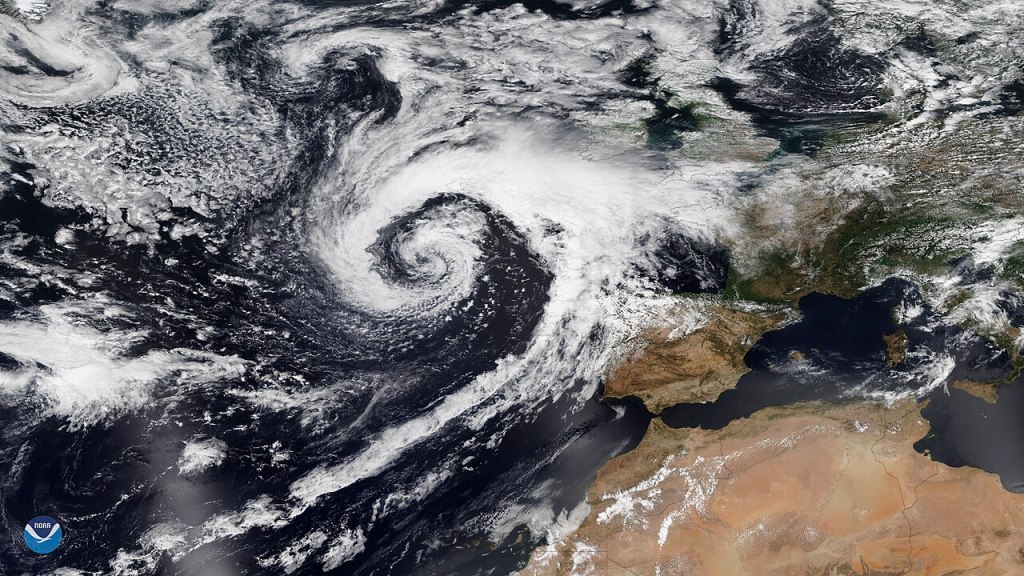
An all too familiar feature of UK weather maps in the winter is the ‘lows’ or ‘depressions’ that bowl in from the Atlantic: swirling masses of air (anticlockwise in the northern hemisphere). In low pressure pockets the air is rising, taking the water vapour it has acquired with it.
Figure 4. A ‘low’ circling around west of the UK
But it gets colder higher up, so the water vapour can no longer be retained in the air. It condenses out, first as a mass of tiny droplets that we see as a cloud. If it cools further, these aggregate into larger droplets that fall under gravity as rain.
But what is it that keeps driving these swirling pockets of low-pressure air eastwards across the Atlantic and the UK? High above the surface air there’s a higher-level conveyor belt doing just that. The jet stream flows steadily, up above the weather systems, at roughly the height at which aeroplanes cruise.
This constant current of fast-moving air, always moving west to east, pushes the Atlantic weather systems eastwards. This ribbon of high-level air undulates as it moves.
Figure 5. The jetstream
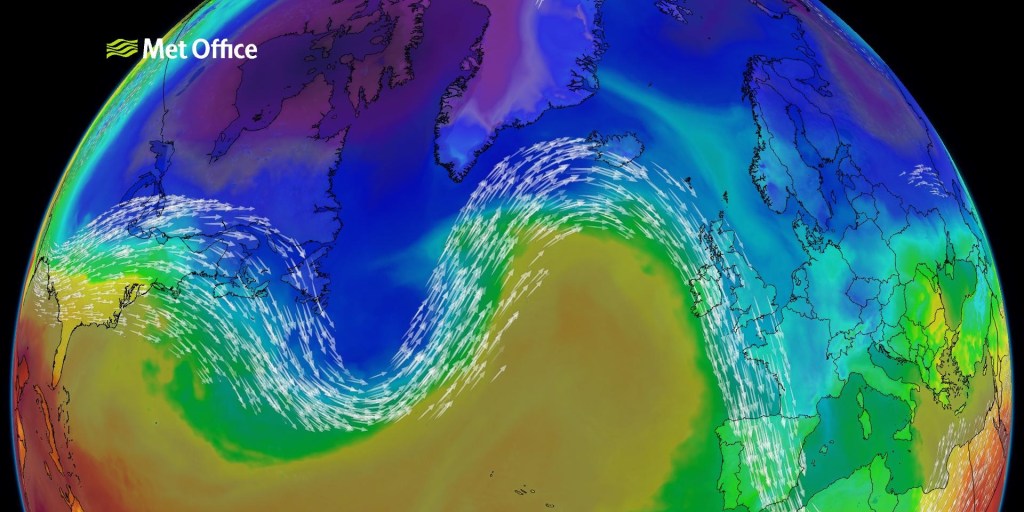
The jet stream itself is caused by the meeting of cold air from the Arctic bashing into warmer air from the tropics – and it’s our misfortune that this happens roughly where the UK is positioned. This winter (January/February 2026) has seen an extraordinary pattern of almost daily rainfall. In many places it is lasting all day and night. The cause of this is yet another anomalous feature: blocking of the eastwards procession of the pockets of low-pressure air, with their accompanying rainfall. A high-pressure system over eastern Europe is simply blocking their path. High pressure systems tend to be static and prevent low pressure zones moving.
Ocean currents
But it’s not only low-pressure weather systems and the Jetstream that climate change is upsetting. It’s also disturbing the movement of water in the oceans themselves.
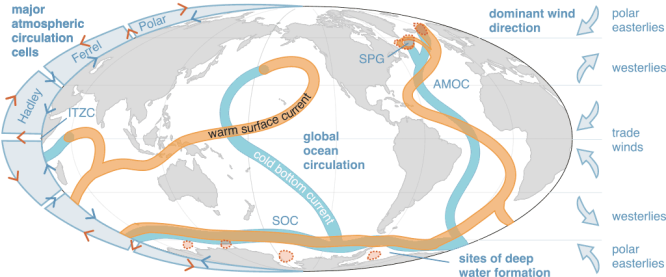
Figure 6. Global ocean currents
A remarkable slow-moving current has been discovered that reaches right around the world in a huge loop. It moves water around the globe in a slow cycle at a speed of ten to a hundred centimetres per second.
In the Atlantic region (AMOC in the figure) warmer surface water from the tropics moves northwards (orange line). As it cools in the polar region it becomes more dense and sinks. The water becomes saltier as well as cooler in the freezing temperatures, adding to its density. This drives a low-level circulation of cool water southwards in the depths of the ocean (blue line). These currents continue across the oceans, slowly moving water around the globe, completing their cycle in around 1000 years. Climate change is upsetting the slow rhythm of this global flow, as water reaching the poles warms up, reducing its tendency to sink. Weakening this great cycle of ocean current could have dramatic effects on both weather patterns and marine life. The relatively mild climates enjoyed in Europe could be a thing of the past.
Other aggravating factors
It’s not only rainfall that causes flooding: sea levels play a part too. As the temperature of the oceans rises, so the water slightly expands. Confined by surrounding land masses, this means the level of the water must rise. Added to this is the effect of extra water entering the oceans as large chunks of ice melt in the polar regions. Between 1901 and 2018, mean sea levels have risen around the world by about 20 cm. This will clearly affect the risk of flooding in coastal areas.
The inexorable pace of urbanisation also contributes to flooding. Covering absorbent land with concrete and asphalt clearly increases the amount of water entering the drainage system and adding to river levels. Greenery helps water hang around longer slowing its movement and storing it for evaporation. Trees take up water from the soil, passing through their trunks to evaporate from their leaves. At least these human factors lend themselves to more immediate preventative actions. It will be important for governments to begin placing greater priority on such measures.
Conclusion
The days when scientists first warned of the potential risks of climate change were long ago. The effects are with us now and will continue to worsen. The political struggle to switch from fossil fuels is being acted out right now, with reversals in the US and advances elsewhere. It’s impossible to predict where this will end up, given the massive development of solar energy in China, but also its continuing development of coal powered power stations. However that story unfolds, actions to mitigate the effects of climate change are bound to dominate politics in the decades to come.
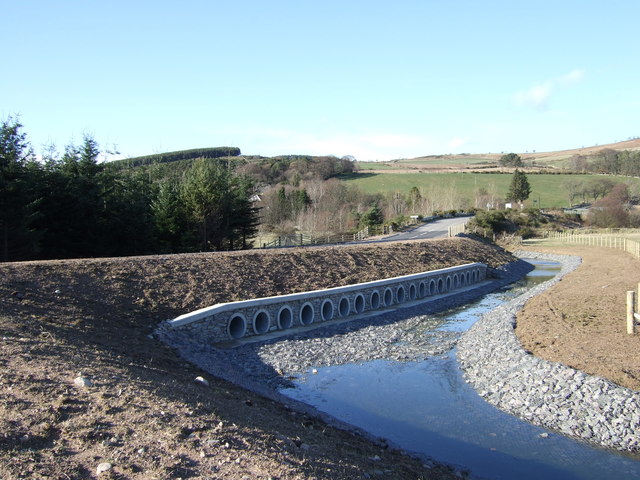
Flooding won’t cease, so water courses will have to be modified, drainage improved, barriers erected and housing displaced. Perhaps farmers will need to change the crops they plant as temperatures and pests alter the ecosystem.
Figure 7. River modification in Cumbria
Flooding and drought will no longer be understood as occasional episodes of bad luck; we’re all going to have to get used to more of our national budget being allocated to long term protection of the environment.
© Andrew Morris February 2026
 Getting to Grips with Science